Patient guide
Stroke & Paralysis Rehabilitation
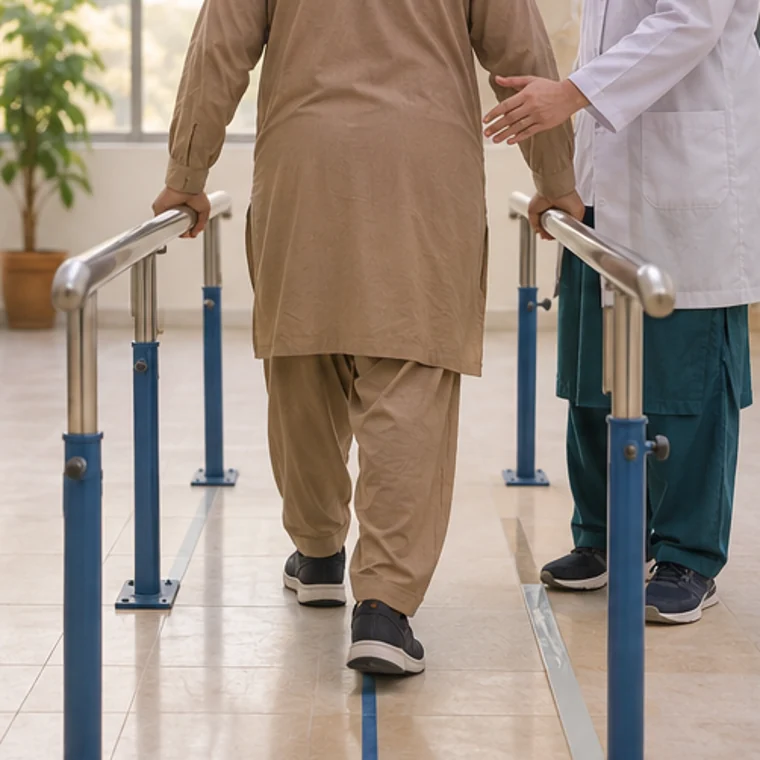
Stroke rehabilitation is coordinated care after medical assessment and stabilization. Physiotherapy can help people practise movement affected by stroke, such as sitting, standing, walking and using an arm during everyday tasks.
Common symptoms and conditions
- One-sided weakness after a medically assessed stroke
- Changes in balance or walking confidence after discharge
- Difficulty moving between a bed and chair or using stairs
Sudden facial droop, arm weakness or speech difficulty can be signs of a stroke. Seek emergency medical care immediately.
How physiotherapy may help
A plan starts with current function and practical goals. Repeated task practice, strength and balance exercises or supported walking may be used as appropriate, with referral or coordination when other rehabilitation needs are identified.
Goals and potential benefits
The aim is to practise meaningful daily activities and help patients and caregivers understand the safest level of support.
What a physiotherapy assessment may involve
Bring the discharge summary and information about current mobility aids if available. An assessment helps decide what can safely be practised and which goals to prioritize.
Frequently asked questions
When can rehabilitation start after stroke?
The medical and rehabilitation team decides when activity is appropriate based on the person’s condition and ability to participate.
How long does stroke rehabilitation take?
The timeline varies with the effects of the stroke, health and daily goals. Progress reviews help guide the next steps.
Clinical references
Request a physiotherapy appointment
Contact the clinic in Rahim Yar Khan for availability and booking details.