
Patient guide
Pediatric Rehabilitation
Pediatric physiotherapy can assess how a child moves and participates in daily activities. Goals are developed with the child and family and may involve play, mobility or practical tasks at home and school.
Common symptoms and conditions
- Concerns about movement milestones, balance or coordination
- Walking or mobility challenges affecting play and participation
- Movement goals for children with a diagnosis such as cerebral palsy
How physiotherapy may help
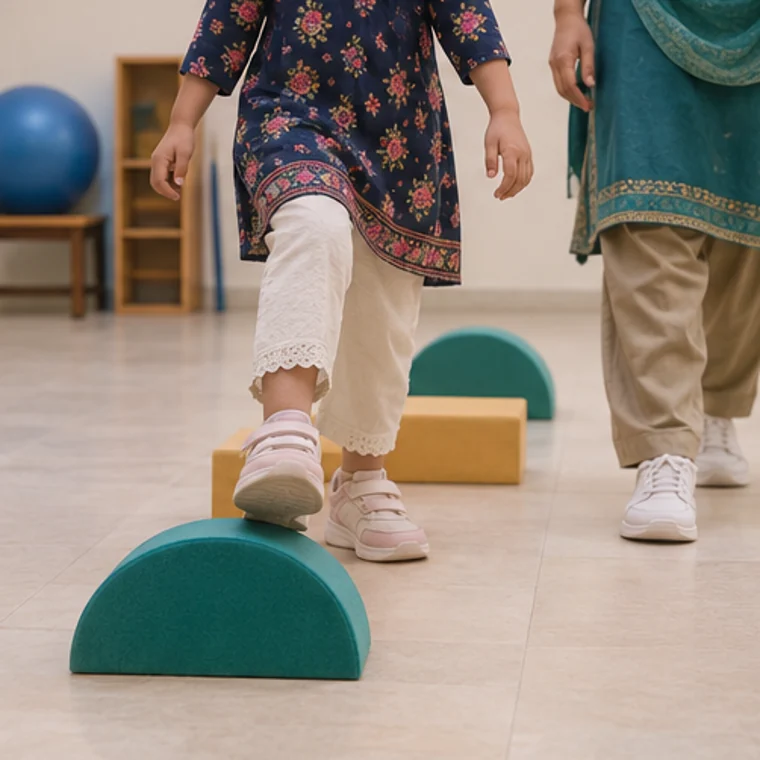
Assessment may include observing movement through play. Activities can be adapted to the child’s interests, abilities and routine, with coordination with other clinicians or school professionals where appropriate.
Goals and potential benefits
A plan may help a child practise specific activities and help families understand how to support participation in everyday routines.
What a physiotherapy assessment may involve
Bring any relevant paediatric reports and describe activities your child enjoys, avoids or struggles with. A parent or caregiver can help set goals that fit daily life.
Frequently asked questions
What should my child wear?
Comfortable clothes and familiar shoes are suitable for most movement assessments. Bring any equipment already used if the clinic requests it.
Can physiotherapy support a child with cerebral palsy?
Movement-focused physiotherapy can be part of a multidisciplinary plan. Assessment helps identify realistic mobility and participation goals.
Clinical references
Request a physiotherapy appointment
Contact the clinic in Rahim Yar Khan for availability and booking details.